
Dear reader,
The market will fund defined risk. It hesitates when policy is uneven and the plumbing is changing. Last week was about the plumbing. Banks, card networks, and Swift pushed live programs that connect fiat settlement to token rails. Prices chopped and ETF flows whipsawed, but the infrastructure story moved forward in ways that matter for allocation.
Market Picture
- Policy: Easier bias, uneven data. That keeps volatility elevated and rewards wrappers that hold near NAV.
- Flows: Spot BTC ETF prints remain choppy. Structure is the edge when flows swing.
- Positioning: Funding stayed contained and options skew leaned mildly defensive. Risk is being managed, not abandoned.
Rails and money – what actually moved:
1) Citi and Swift completed a fiat to digital PvP settlement trial
A production-style pilot proved Payment versus Payment between fiat bank rails and digital assets using Swift messaging and Citi’s digital infrastructure.
Why it matters for allocators: Atomic, cross-border settlement without daylight overdraft turns tokenized cash and funds from idle balances into working capital that moves when portfolios do.
2) Visa Direct and Mastercard Move enabled stablecoin payouts
Visa and Mastercard (with Thunes) added push-to-wallet stablecoin disbursements for creators and SMEs in cross-border use cases.
Why it matters: Stablecoin endpoints now sit next to cards and bank accounts. Payouts clear faster, pre-funding shrinks, and stablecoin balances become practical treasury tools.
3) J.P. Morgan rolled out a USD deposit token on a public chain (Base)
The token represents USD deposits at J.P. Morgan and can move on chain inside a bank-grade compliance perimeter.
Why it matters: G-SIB bank money just met public token rails. It sits naturally beside tokenized T-bills and tightens funding and redemption timelines.
4) J.P. Morgan and DBS outlined interoperability for tokenized deposits
DBS Token Services and Kinexys by J.P. Morgan are building standards so tokenized deposits can move across public and permissioned chains.
Why it matters: Interoperability turns single-bank pilots into a network. Payables, payroll, and collateral can run on one auditable timeline across jurisdictions.
Tokenization Pulse
5) Tokenized T-bills became marginable on Aave (VBILL)
VanEck and Securitize’s VBILL gained collateral eligibility with daily NAV oracles and allowlists.
Why it matters: NAV-anchored fund discipline is meeting on-chain credit. Haircuts, halts, and attestations bring traditional risk controls to programmable borrowing.
6) RWA growth held up through the chop
Tokenized U.S. Treasuries are near nine billion across more than fifty products. Total on-chain RWAs sit in the mid-thirty billions over the last 30 days.
Why it matters: “Cash on chain” is compounding as treasury, settlement, and collateral plumbing, not just a yield chase.
7) Tokenized gold remained the leading commodity sleeve
Demand tracked the broader bid for defensive assets while staying in the same workflows as digital cash.
Why it matters: A liquid, 24-hour macro hedge that rebalances alongside tokenized cash is practical in a headline-sensitive tape.
Market Flows to Note
8) US spot BTC ETFs saw record outflows midweek:
The worst daily prints of the year underscored how flow-driven the tape remains.
Why it matters: Prefer wrappers with reliable creation and redemption to minimize premium and discount risk while single-day flows swing.
Allocation Takeaways
Core liquidity: Use tokenized T-bill or short-duration funds for treasury and collateral. Prioritize daily look-through, eligibility controls, and reputable service providers.
Diversifiers: Add a measured tokenized gold sleeve where mandates allow. Treat it as a liquid hedge, not a trade.
Core beta: Prefer structures with creation and redemption while ETF flows remain choppy.
Special situations: If holding equity wrappers that own coins, require issuance discipline, funded buybacks at a stated discount band, and frequent coin-per-share reporting.
Closing Thoughts
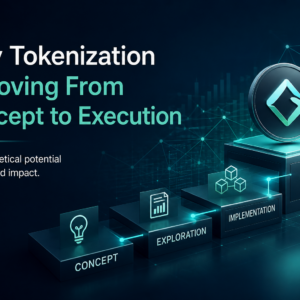
Settlement risk is falling. Money is becoming programmable inside the rules. As banks, networks, and Swift connect fiat rails to token rails, tokenized cash, credit, and commodities are moving from concept to core market plumbing. That is where long-term adoption compounds.
Question of the week:
If settlement is programmable and NAV is available on chain, what percentage of your cash should live in tokenized instruments that can fund, collateralize, and redeem 24/7 while staying inside audit-ready controls?
Onward,
Lewis Bateman
This newsletter is provided for informational purposes only and does not constitute investment advice. Always conduct your own research before making investment decisions.