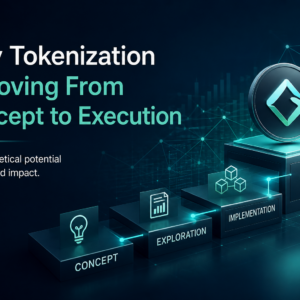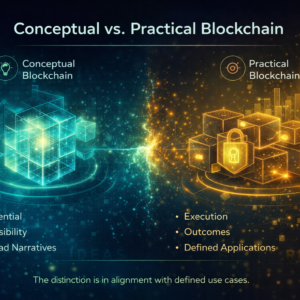
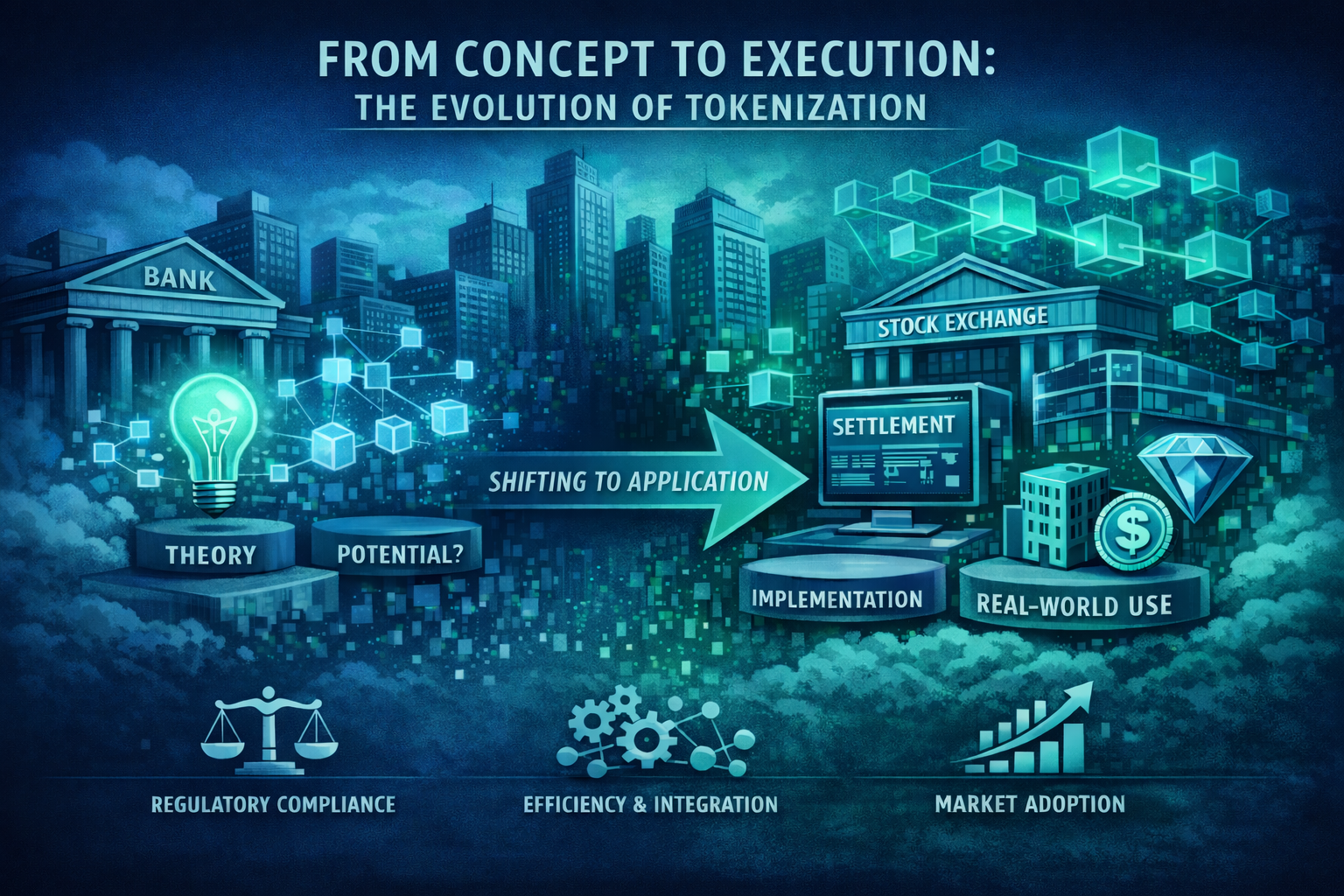
Tokenization has been discussed extensively across financial markets for several years. It has often been framed as transformative, but for a long time it remained largely conceptual. The narrative was ahead of the execution.
That dynamic is beginning to change.
The conversation around tokenization is shifting from possibility to application. Instead of asking what tokenization could become, market participants are starting to evaluate how it is being implemented in practice. This shift is important because financial markets tend to reward execution, not early positioning.
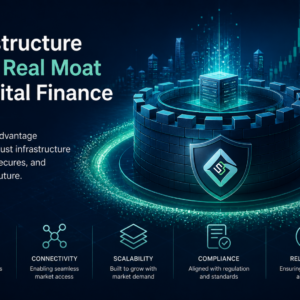
At its core, tokenization refers to the digital representation of assets using distributed infrastructure. While the concept itself is straightforward, its relevance depends on how it integrates into existing market structures. The most credible approaches are those that align with regulatory frameworks, investor expectations, and operational realities.
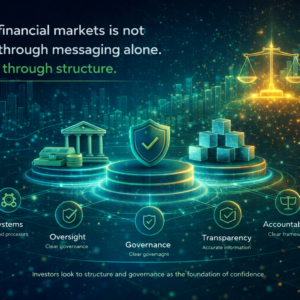
According to the World Economic Forum, tokenization has the potential to improve how assets are issued, managed, and transferred. McKinsey similarly notes that tokenized assets could scale significantly over time, but emphasizes that adoption will depend on infrastructure, governance, and usability.
This is where the transition to execution becomes meaningful.
Financial institutions and infrastructure providers are beginning to test tokenized models in areas such as settlement, asset servicing, and alternative asset access. These efforts are not driven by narrative. They are driven by a need to improve efficiency and reduce friction within existing systems.
At the same time, there is growing recognition that tokenization is not a replacement for traditional finance. It is an extension of it. The most effective implementations are those that complement existing processes rather than attempt to bypass them.
This distinction matters because it sets the tone for how tokenization should be introduced to the market. Overstating its impact can undermine credibility. Understating its relevance can limit its adoption. The balance lies in positioning tokenization as a practical layer of infrastructure that supports broader capital market activity.
For companies operating in this space, the implication is clear. The opportunity is no longer in describing what tokenization could be. It is in demonstrating how it works in real environments.
Execution will define the next phase of tokenization.
If you are exploring how tokenization may fit within your broader strategy, the starting point is not technology. It is clarity on use case, structure, and execution.
Sources
World Economic Forum: https://www.weforum.org/publications/asset-tokenization-in-financial-markets-the-next-generation-of-value-exchange/
McKinsey: https://www.mckinsey.com/industries/financial-services/our-insights/from-ripples-to-waves-the-transformational-power-of-tokenizing-assets
Deloitte: https://www.deloitte.com/us/en/Industries/financial-services/articles/tokenization-in-financial-services.html
Disclaimer
The content provided by Spirit Blockchain Capital Inc. is for informational purposes only and does not constitute investment advice, financial advice, or a solicitation to buy or sell any securities. Information presented may include general market commentary and forward-looking statements, which are subject to risks and uncertainties. Actual results may differ materially. While believed to be accurate at the time of publication, no representation or warranty is made as to completeness or accuracy. Readers should conduct their own due diligence and consult professional advisors before making any decisions. Spirit undertakes no obligation to update this information except as required by applicable securities laws.