Capital markets do not change suddenly.
Unlike consumer driven sectors, where shifts can be rapid and visible, financial markets evolve gradually. Changes are layered over time and often go unnoticed in the moment. Yet these incremental developments can reshape how markets function.
This is what is happening today.

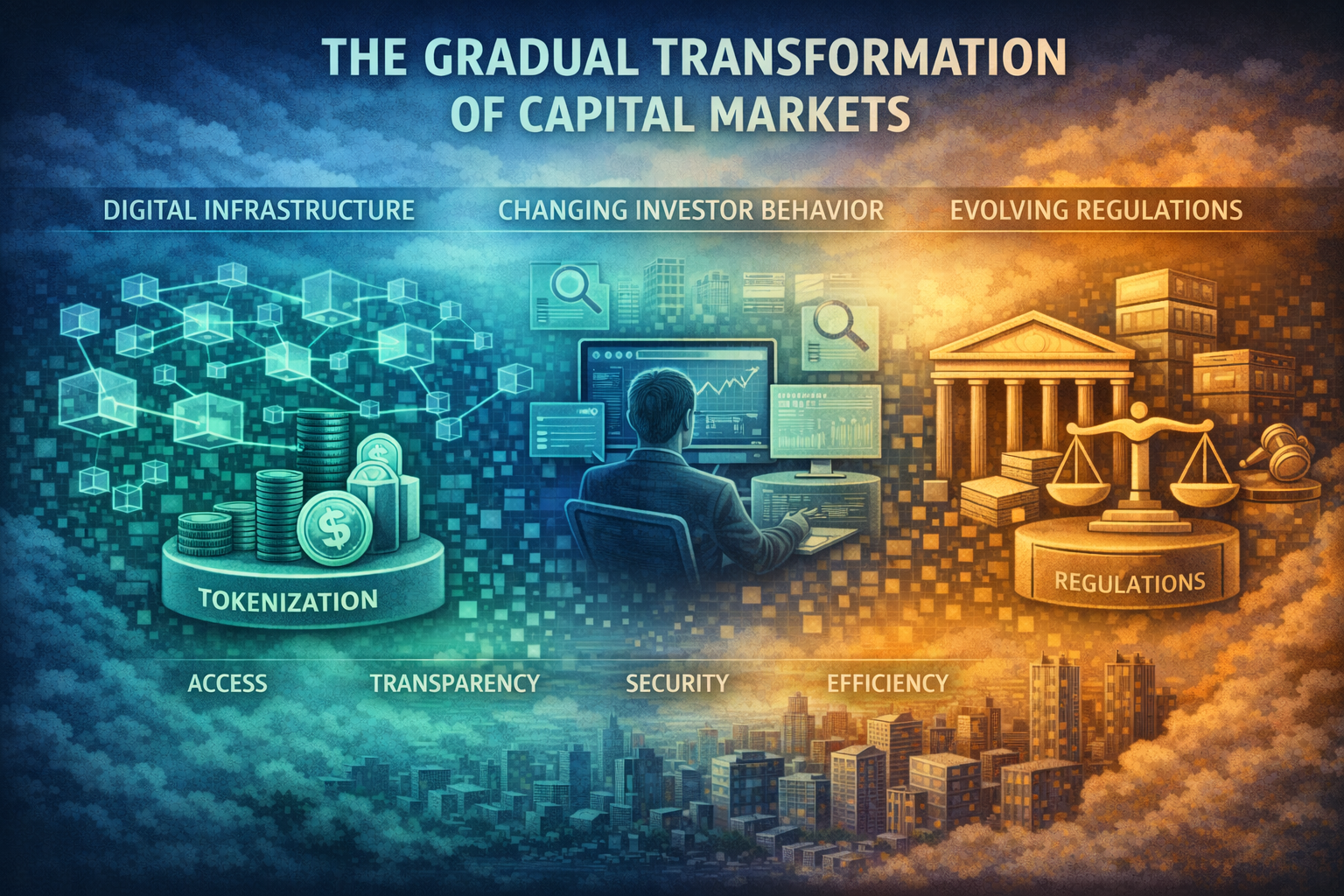
The transformation of capital markets is being driven by a combination of digital infrastructure, changing investor behavior, and evolving regulatory frameworks. None of these factors are new on their own, but together they are influencing how capital is raised, allocated, and managed.
One of the most important developments is the digitization of financial processes.
Tokenization is part of this broader trend. It introduces new ways to represent and manage assets, but its impact depends on how it integrates into existing systems. According to McKinsey, the long term effect of tokenization will be determined by its ability to improve efficiency and accessibility within current market structures.
Investor expectations are also shifting.
Access to information has increased, and investors are placing greater emphasis on transparency and clarity. This affects how companies communicate and how opportunities are evaluated.
At the same time, regulators are adapting to these changes. The objective is to support innovation while maintaining stability. This balance is shaping how new technologies are introduced and how quickly they are adopted. The result is a quiet transformation.
Markets are becoming more connected, more data driven, and more responsive to technological change. These shifts are not disruptive in isolation, but collectively they represent a meaningful evolution.
For companies, the implication is not to react to every new development, but to understand the direction of change. Positioning within this environment requires awareness, discipline, and the ability to adapt without overextending. The transformation of capital markets is not defined by a single breakthrough. It is defined by a series of adjustments that, over time, redefine the system.
Understanding where these shifts are occurring can help inform how you position within them.
Sources
McKinsey: https://www.mckinsey.com/featured-insights/mckinsey-explainers/what-is-tokenization
World Economic Forum: https://www.weforum.org/publications/asset-tokenization-in-financial-markets-the-next-generation-of-value-exchange/
Disclaimer
The content provided by Spirit Blockchain Capital Inc. is for informational purposes only and does not constitute investment advice, financial advice, or a solicitation to buy or sell any securities. Information presented may include general market commentary and forward-looking statements, which are subject to risks and uncertainties. Actual results may differ materially. While believed to be accurate at the time of publication, no representation or warranty is made as to completeness or accuracy. Readers should conduct their own due diligence and consult professional advisors before making any decisions. Spirit undertakes no obligation to update this information except as required by applicable securities laws.