Blockchain is often described in broad and aspirational terms.
It is positioned as foundational, transformative, and widely applicable across industries. While these descriptions capture its potential, they can obscure a more relevant distinction.
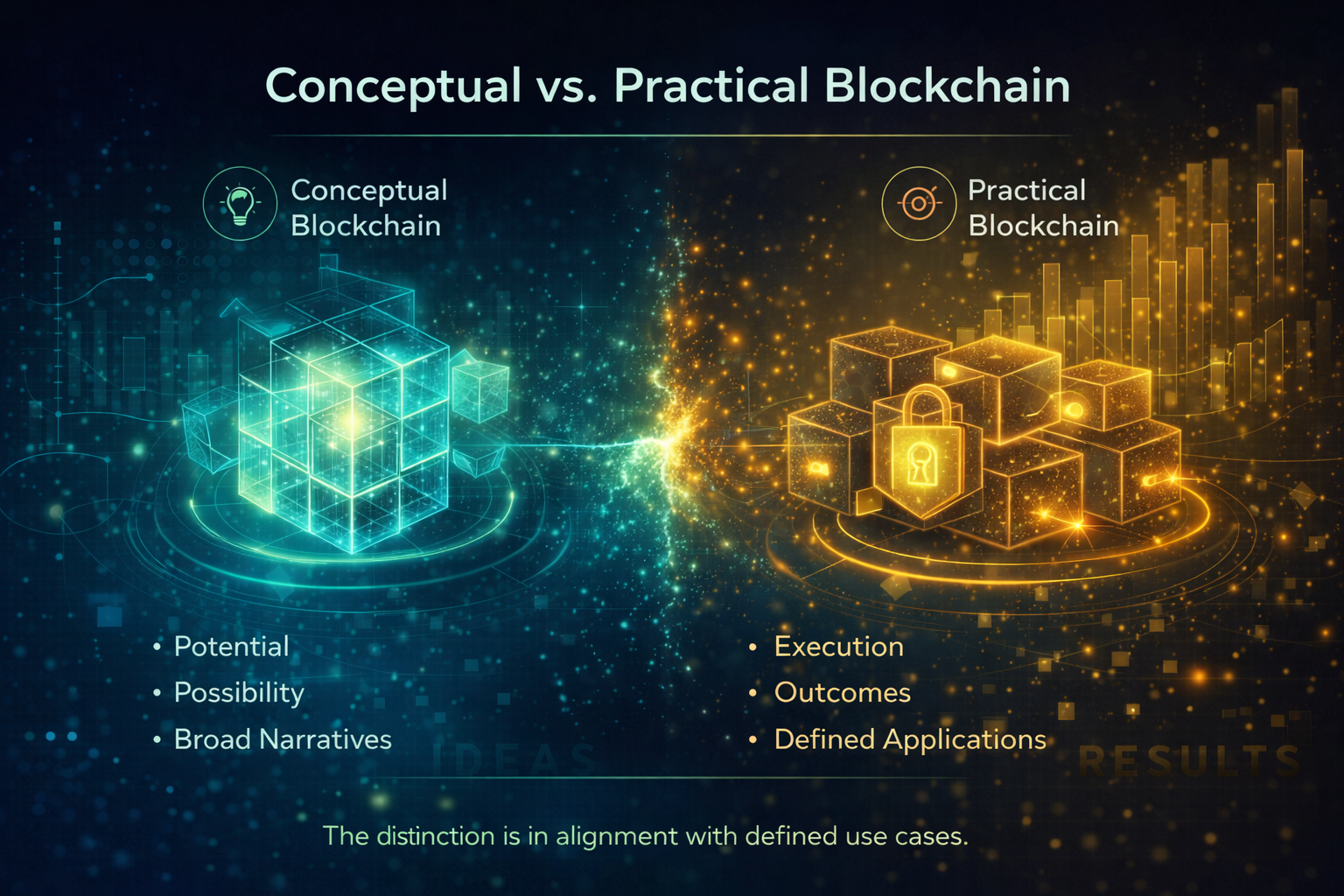
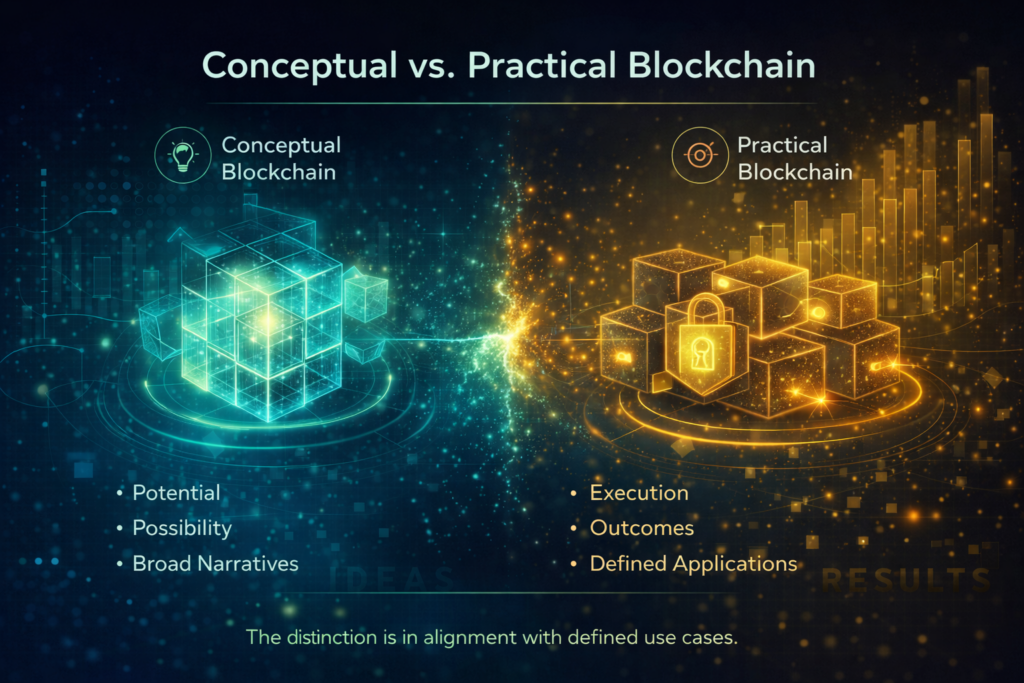
The difference between conceptual blockchain and practical blockchain. Conceptual blockchain focuses on possibility. It emphasizes what the technology could enable, often without reference to constraints, integration, or specific use cases. This perspective is useful in early stages of development, but it does not necessarily translate into adoption.
Practical blockchain is defined by execution. It focuses on how the technology operates within real environments. It considers regulatory requirements, operational realities, and alignment with existing systems. Most importantly, it is tied to defined use cases with measurable outcomes.
This distinction is becoming increasingly important as the technology matures.
The World Economic Forum has noted that the next phase of blockchain adoption will be driven by real world applications rather than exploratory experimentation. McKinsey similarly highlights that successful implementations tend to focus on areas where blockchain can improve efficiency, transparency, or coordination within existing processes.
In practice, this means narrowing the focus. Rather than positioning blockchain as a universal solution, practical approaches identify specific problems and evaluate whether the technology provides a meaningful advantage. Examples include improving settlement processes, enhancing auditability, and enabling new forms of asset representation.
These are targeted applications, not broad narratives. For companies, this shift has implications for how blockchain is communicated.
Emphasizing application over theory supports credibility. It demonstrates an understanding of both the technology and the context in which it is being deployed. It also aligns with how investors evaluate new developments, which is through evidence of use rather than potential.
Conceptual discussions can generate interest, but they rarely sustain it. Markets respond to clarity, relevance, and execution. As blockchain continues to evolve, its role will be defined less by what it promises and more by where it delivers measurable value.
Understanding this distinction is essential for any organization seeking to position itself within the space. The focus should not be on explaining what blockchain is capable of in theory, but on demonstrating where it is being applied effectively in practice.
Sources
World Economic Forum, Blockchain Beyond the Hype, 2020
https://www.weforum.org/reports/blockchain-beyond-the-hype
McKinsey & Company, Blockchain beyond the hype: What is the strategic business value?
https://www.mckinsey.com/capabilities/strategy-and-corporate-finance/our-insights/blockchain-beyond-the-hype
Deloitte, Global Blockchain Survey, 2022
https://www2.deloitte.com/us/en/pages/consulting/articles/global-blockchain-survey.html